
Nieman Foundation at Harvard

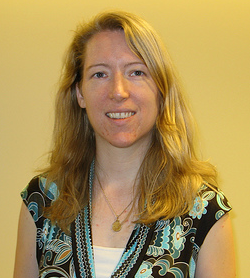 On Thursday, the non-profit investigative journalism outfit ProPublica named Amanda Michel its first “editor of distributed reporting.” Her title alone suggests the future of news gathering, and so does her background: Michel was director of The Huffington Post’s citizen-journalism effort, Off the Bus, which enlisted 12,000 volunteers to cover the 2008 presidential campaign.
Michel wrote a must-read account of the project for Columbia Journalism Review, and she expounded on the experience in an hour-long interview with me on Thursday evening. She would probably be the first to argue that there are no ironclad rules in this game, so I hope she excuses this distillation of our conversation into five tips for running a successful citizen-journalism operation:
1. Recruit people for a mission, not a concept. News organizations may gravitate toward citizen journalism because it’s hip, intriguing, or free, but that’s not why citizen journalists do it. They want to join a clearly defined project on a topic of personal interest. Why else would they devote time to the effort? Michel told me:
Much like campaigns set the pace by declaring initiatives, by throwing out goals and then recruiting people to help meet those goals, I did the same thing in journalism. So I didn’t try to build the stable of people and then say, “OK, now what can we do?” But I literally worked as both an editor and organizer, constantly seeking out…reporting opportunities for us, and then using those to recruit people. So the basic idea wasn’t, “Hey, just join Off the Bus.” It was, “Help us figure out x. Let’s look into y.”
2. Pick stories that are suited to a crowd. You wouldn’t send the whole newsroom to cover a press conference, and the same theory applies to citizen journalism. In his book Here Comes Everybody, Clay Shirky discusses how the Coney Island Mermaid Parade, with its overwhelming breadth and built-in audience, is the perfect event for crowdsourced coverage. Likewise, Michel’s first assignment for ProPublica is the federal stimulus package:
Here you have a very broad but deep story that’s going to take place in communities all around the country at different times. For obvious reasons, you can see how it would stretch any single reporter’s skills to the max to cover that story.
3. Do something uniquely valuable. Citizen journalism isn’t make-believe reporting, and no one wants to tread over ground that’s already been covered by the pros. That’s why crowds are best deployed to areas undercovered by the traditional press, where the value and impact will be apparent:
In general, I would say people respond far better and have a lot more interest when it’s pretty clear their work is going to pay off. They’re going to do something that would not otherwise get done.
4. Keep track of the crowd. In our chat, Michel frequently compared her work running Off the Bus to her previous career in political organizing. (Among other roles, she was national director of Generation Dean, the youth organizing arm of Howard Dean’s presidential campaign.) Good campaigns always know where they stand, and so does an effective citizen-journalism operation. In her CJR piece, Michel wrote:
Metrics were essential to make sure work got done. I tracked people’s participation, and noted when they dropped out of a project. We knew which of our writers got published more frequently. The number of people who opened our e-mails and then took action told me our conversion rates.
5. Don’t worry about what it’s called. When I solicited questions for Michel on Twitter, several people expressed frustration with terms like crowdsourcing and citizen journalism that have come to dominate these discussions. Ruth Ann Harnisch, whose foundation supports “representative journalism,” suggested “community supported” and “community sourced” journalism would be preferable to the common buzzwords. Michel, whose title at ProPublica is a formal twist on all these options, told me she has never been thrilled with any of the terms. Crowdsourcing strikes her as “too transactional,” though she did not immediately object to my alternative name for her position: crowdsorcerer. And citizen journalism, Michel said, “focuses on agency, which is exactly what gets us into the wrong discussion.” She continued:
There has been quite bit of animosity and heated debate over the potential of citizen journalists and whether or not they’re going to replace traditional journalists. And again, I think this question of who displaces the question of what, which I think is fundamentally more important and interesting… By focusing on who is doing it and making that the most important criteria, I think we actually lose sight of what journalism is.