Nieman Foundation at Harvard

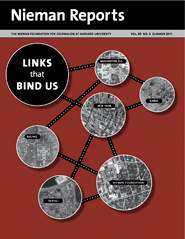
Editor’s Note: Our sister publication Nieman Reports is out with its summer 2011 issue, “Links That Bind Us,” which focuses on the role community plays in journalism. We’re highlighting a few entries that connect with subjects we follow at the Lab, but go read the whole issue. In this piece, Alicia Shepard writes about quality of online discourse (or lack thereof) during her three-year tenure as NPR ombudsman.
 It might be hard to believe, but one reason NPR was inspired to build its social media community is what it found in personal ads like this one — “Female golfer, loves NPR, travel and skydiving, is looking for like-minded man.” With NPR squeezed into the middle of self-portraits, the network figured that if it created a digital public square, people would want to congregate there.
So three years ago NPR invited its 27 million listeners to gather at this virtual water cooler to share ideas, suggest stories, offer comments and criticisms, and participate in civil dialogue. Joining NPR’s digital community requires creating an account. Individuals need to log in each time they comment on a story, though using real names is not required. So far 500,000 people have signed up as members of the NPR.org community.
Since the launch in 2008, those tasked with oversight of this digital community’s dynamics at times have felt as though they are riding a bucking bronco in the rodeo ring. Those feelings hit hardest when contentious issues surface, and it can be challenging to maintain civil dialogue as conversations devolve into downright meanness.