

German tabloid Bild is experimenting with delivering news to its readers via Facebook Messenger. The first experiment is limited to “news, background information, and rumors regarding the transfer window of the German soccer league.” (Soccer teams are only allowed to add players twice a year; January is one of those transfer periods.)
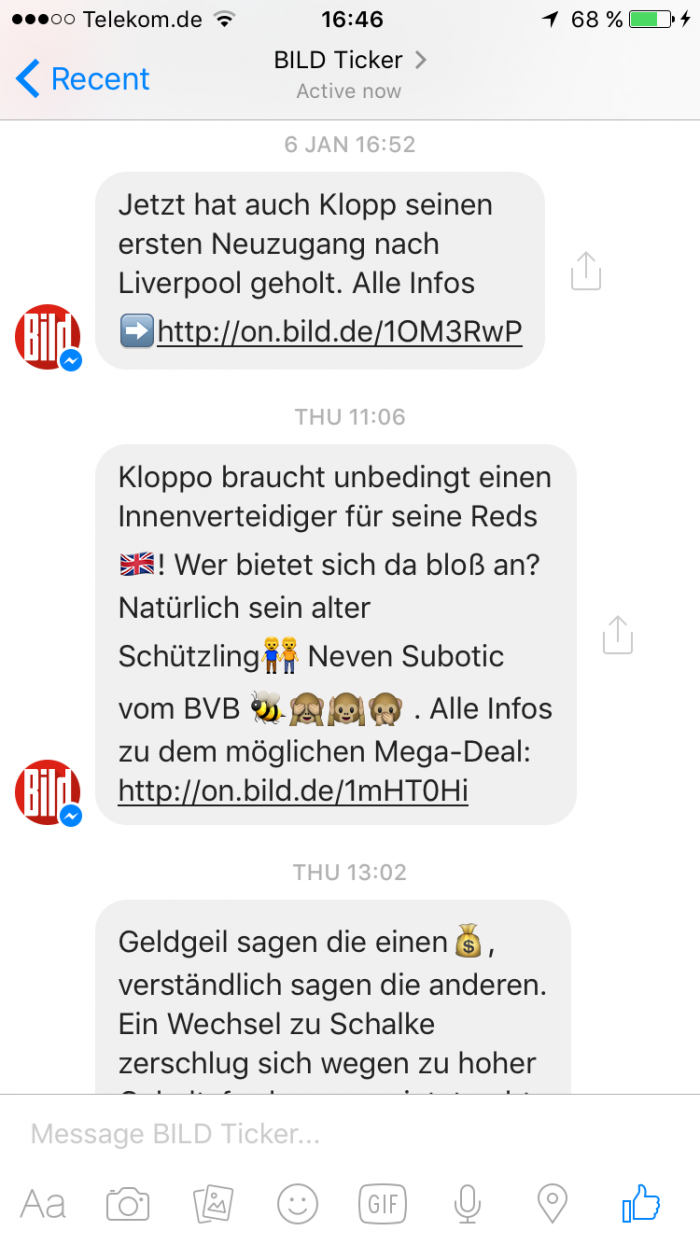 Users can subscribe to the service here or by sending Bild Ticker a message.
Starting Friday, Bild will launch a second news ticker via Messenger, providing news about the German version of the reality TV show I’m a Celebrity…Get Me Out of Here!
For now, the content delivered via Facebook Messenger is also posted on Bild’s various other platforms and isn’t exclusive to Messenger. Bild wouldn’t disclose how many users have signed up, and it’s experimenting with the frequency of updates.
“Bild has to be where its readers are,” Julian Reichelt, editor-in-chief of Bild.de, said in a statement. “About 30 million people in Germany experience their daily digital routine on Facebook. That’s why we engage in Instant Articles and that’s why we, together with Facebook, look for solutions to deliver our peerless content faster and smarter to our readers.”

A Bild spokesman told me he believes Bild is the first publisher to send Facebook Messenger updates with Facebook’s blessing, as evidenced by the fact that Facebook verified Bild’s ticker page.


