Articles by Ken Doctor

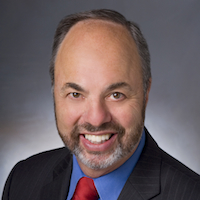
Ken Doctor is a news industry analyst and the author of Newsonomics: Twelve New Trends That Will Shape the News You Get (St. Martin’s Press). He also runs the book's companion website, newsonomics.com. He is an analyst for the research firm Outsell and a regular consultant and speaker. He spent 21 years with Knight Ridder in a variety of roles, including as managing editor of the St. Paul Pioneer Press and as a vice president of Knight Ridder Digital.

The Newsonomics of emerging news video

[Each week, our friend Ken Doctor — author of Newsonomics and longtime watcher of the business side of digital news — writes about the economics of the news business for the Lab.]

The New York Times. Video. Three years ago, that seemed like an oxymoron, save the Times’ occasional forays into TV experiments. Now, Times TV pops up in front of us on airplane TVs and news video has become an emerging feature of Times sites. As Apple and NYT staffers plot behind closed doors in the Times building, we can expect that Times video will be a key element of the iPad NYT launch.

Behind what we see, though, are some critical developments in processing of digital video, the behind-the-scenes heavy lifting that often determines time-to-market, and business failure or success.

We can get a glimpse into that with the Times’ recently announced deal with Thought Equity Motion (TEM). Founded in 2003, the company now has an impressive list of customers: BBC, CBS (the current NCAA Vault, a March Madness-related product was co-produced with TEM), NBC and Japan’s NHK, among more than a dozen top brands in total. The New York Times, importantly, is the company’s first newspaper client.

Before we look at what TEM does for these companies, consider two big numbers here: 10.5 million hours and 10 percent. Read more

Ken Doctor | March 18 | 1 p.m.

Tags: , , , , , , , , , , , ,

The Newsonomics of new news syndication

[Each week, our friend Ken Doctor — author of Newsonomics and longtime watcher of the business side of digital news — writes about the economics of the news business for the Lab.]

It’s tough to get the printer’s ink out of news people’s veins. For many, journalism = printing, and in printing, each copy costs extra. It’s an analog, manufacturing mindset, and one to finally bid goodbye.

Of course, we all know how freely we can fling stories about on the web, but second copy value — and cost — has an evolving business model implication, as the news industry looks for new pillars of support. That business model implication is syndication. Read more

Ken Doctor | March 11 | noon

Tags: , , , , , , , , , , , , , , , , , ,

The Newsonomics of time-on-site

[Each week, our friend Ken Doctor — author of Newsonomics and longtime watcher of the business side of digital news — writes about the economics of the news business for the Lab.]

Parse out the numbers, and they’re quite puzzling.

The average news reader spends little time on newspaper-owned sites, from a 20 minutes a month or so on the New York Times site to eight to 12 minutes on most local newspaper sites. That’s minutes per month. Those numbers, as tracked by Nielsen and reported monthly by Editor and Publisher, are steady at best, showing, in fact, some recent decline. They are, literally, stuck in time.

Then, take the number of minutes Internet users spend on social sites. Nielsen’s January tally showed seven hours of usage a month on Facebook alone, in the U.S., blowing away all competition. That’s some 40 times more time spent on social sites than on any single news site.

Which is a bit deflating for those in the news business. So let’s try to get at what the numbers may be telling us. Read more

Ken Doctor | March 4 | 10 a.m.

Tags: , , , , , , , , , , ,

The Newsonomics of profit: Google’s and newspapers’

[Each week, our friend Ken Doctor — author of Newsonomics and longtime watcher of the business side of digital news — writes about the economics of the news business for the Lab.]

Last Friday, Google finalized a modest acquisition. It bought On2, a video compression company for $124.6 million. A few days earlier, it bought reMail, a company put together by Google alums that has perfected a better email app for the iPhone, price undisclosed.

In the few months before that, it bought social search startup Aardvark, display ad tech company Teracent, collaborative real-time editor AppJet, VoIP provider Gizmo — and, most significantly, mobile ad network, AdMob, the latter for $750 million, in November.

Basically, Google’s been buying up companies at at least the rate of monthly, as CEO Eric Schmidt had bluntly forecast last September.

Of course, Google can buy lots of companies. That buying power is a rare commodity these days, especially if you compare it to what newspaper companies can do. Read more

Ken Doctor | Feb. 25 | noon

Tags: , , , , , , , , , , , , , , ,

The Newsonomics of online marketing

[Each week, our friend Ken Doctor — author of Newsonomics and longtime watcher of the business side of digital news — writes about the economics of the news business for the Lab.]

Take two simple words: online advertising and replace them with “digital marketing.”

Within that simple word change, we see a world shift, and one of huge, fundamental importance to news publishing.

“Online advertising” has been a steep learning curve for text-based news companies, as well as broadcasters. They’ve built a small business on it, about $3.5 billion a year, according to the Newspaper Association of America. That’s after 15 years of transitioning ad sales from print to bundled, and lately, with McClatchy a leader here, to print, bundled and online-only. Still, that’s just $3.5 billion, compared to some $35 billion in print advertising.

Even with all the investment made, digital revenues make up no more than 15% of any local newspaper company’s total revenue. In addition, while some $23 billion was spent on online advertising (the fastest growing ad category in the country) in the U.S. in 2009, newspaper companies take in maybe 15 cents of every dollar there, compared to the 20 cents on a dollar they got of the old pre-digital world ad pie.

Online advertising is where the game has been played. Now it’s moving to digital marketing. The new definition targets two big shifts: Read more

Ken Doctor | Feb. 18 | noon

Tags: , , , , , , , , , ,

The Newsonomics of social media optimization

[Each week, our friend Ken Doctor — author of Newsonomics and longtime watcher of the business side of digital news — writes about the economics of the news business for the Lab.]

This week’s buzz is all about Google Buzz, the search giant’s entry into the status-update world. But the humming of social media — and its implications for news media — just keeps getting louder and louder. News people are in the social web, use the social web and write about the social web — but can they can make the social web part of their digital publishing businesses? That’s a big, important question, and one just dawning on many people in the news business.

First, let’s consider a number of datapoints:

— Nielsen reports that Internet users worldwide now spend 5.35 hours a month on social networks, up from just three hours a year ago. The social web is the new home page; remember how news sites all put up “make us your home page” buttons just a decade ago. News sites, of course, are lucky to break into double digits — 10 minutes — per month in usage.

— Facebook Mobile just announced yesterday that it busted through the 100 million user mark, up from 65 million in September.

— Bit.ly, one of the top “URL shortening service providers” — sends about two billion link referrals a month, largely given its Twitter stronghold. Question, of course, is how many of those may link to news or information; try, maybe, 20 percent, according to a recent Rutgers survey of social use that shows that 20 percent of posts in the statusphere come from “informers,” those that share news and information. The other 80 percent: the what-I-ate-today people.

— A recent study I did with Outsell said that 44 percent of news readers say they use social networks to share news and information. Of those, half use Facebook to do it; one in five use Twitter.

Read more

Ken Doctor | Feb. 11 | 10 a.m.

Tags: , , , , , , , , , , , , , , , , ,

From Ken Doctor’s “Newsonomics”: Freelancing and the gig economy

By Ken DoctorFeb. 10  /  noon  /  3 comments

[Here's our final excerpt from Ken Doctor's new book, Newsonomics: Twelve New Trends That Will Shape the News You Get. It's a Q&A with Nancy Shute, a veteran science writer who is adjusting to life as a specialist in the new media world. —Josh]

Nancy Shute, a twenty-year veteran of U.S. News & World Report, has covered science and medicine for national publications for more than twenty years. Many of us focus on national news, local news, economic news, and the like, but science news greatly impacts our lives. It, too, is suffering in the news traumas we’re seeing.

Usha McFarling, a science journalist who won a 2007 Pulitzer Prize for explanatory writing, argues that “media atrophy” is reducing the discourse on vital issues — at the worst possible time. In her reportage on climate change she showed how vested interests (from both the right and the left side) “hijacked” the story to fit their agendas, but not serve the public overall. Keep reading »

From Ken Doctor’s “Newsonomics”: How paidContent found its niche

By Ken DoctorFeb. 9  /  noon  /  1 comment

[Here's another excerpt from Ken Doctor's new book, Newsonomics: Twelve New Trends That Will Shape the News You Get. Today, Ken's Q&A with Rafat Ali, who runs media-world must-read paidContent. —Josh]

Rafat Ali is founder, publisher and editor of ContentNext Media. Reuters described its success well: “ContentNext’s flagship paidContent, founded in 2002, has quickly established itself as a must-read among executives in the media and digital media sector.” PaidContent has indeed a daily stop for those involved in the business of news, media, and entertainment industries. In addition, the company runs parallel sites for the United Kingdom and India and around mobile content.

Q: PaidContent filled a niche no one had previously seen as clearly as you did. How did you see the niche, define it, and make sure you got it as focused as you could?

A: This was the depths of Internet recession in 2002 in New York City, and I was looking for a way to raise my profile, and this seemed like a good way to showcase my skills as an online journalist covering online media and the Internet. I was aiming for a new job with the likes of WSJ and CNET then. Of course, no one was hiring in those days, much less hiring an online journalist covering online media. Keep reading »

From Ken Doctor’s “Newsonomics”: What Phil Balboni learned about online journalism from cable news

By Ken DoctorFeb. 8  /  noon  /  1 comment

[I'm very pleased to say that Ken Doctor, one of the smartest minds out there on the business side of journalism's digital future, is going to be joining us here at the Nieman Journalism Lab. You'll see his pieces on the economics of news here weekly. But at the moment, Ken is focused on the release of his new book, Newsonomics: Twelve New Trends That Will Shape the News You Get. Today, tomorrow, and Wednesday, we'll be running three brief excerpts from the book, each a Q&A with a leading journalist whose career has been shifted by the Internet. First up is GlobalPost CEO Phil Balboni. —Josh]

Phil Balboni launched GlobalPost in January 2009, just as many news companies were further reducing international reporting. He acted on a forty-year-old idea he’d had about bringing back global news to American audiences — and had seen that the ability of Internet efficiencies now made it possible. GlobalPost is his second career; he founded and ran the award-winning New England Cable News (NECN) business for many years. Now he can look out on the harbor, where clipper ships came in, and beyond, to his growing network of more than seventy correspondents working around the world.

Q: How did your cable news experience inform your GlobalPost plan?

A: There are quite a few, seminal lessons learned from NECN. First, the enormous value of more than one revenue stream and not being solely dependent on advertising. Keep reading »