Michael Andersen is a contributor to the Nieman Journalism Lab. He was the founder of Portland Afoot, a nonprofit startup covering low-car life in Portland, Ore., and he writes about local-news entrepreneurship at oldforestnewtrees.com. He is currently an editor with BikePortland.org. He studied at Grinnell College and Northwestern; he’s impersonated a metal thief, a terrorist, and a panhandler; and he’s a pretty big fan of bread. Send yeast packets to mike.andersen@gmail.com.
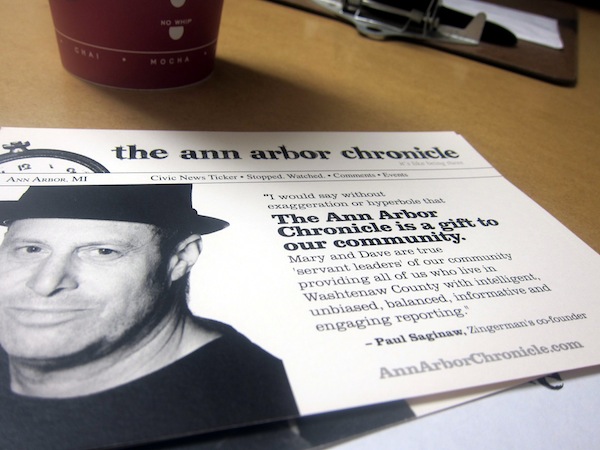
Handed an opportunity by the closure of the Ann Arbor News, two married journalists have built a small business on the kind of civic-minded reporting that isn’t supposed to work online.
Andersen, Michael. "Selling ads without a sales force: A close look at PaperG’s Flyerboard." Nieman Journalism Lab. Nieman Foundation for Journalism at Harvard, 4 Aug. 2009. Web. 27 Apr. 2024.
APA
Andersen, M. (2009, Aug. 4). Selling ads without a sales force: A close look at PaperG’s Flyerboard. Nieman Journalism Lab. Retrieved April 27, 2024, from https://www.niemanlab.org/2009/08/selling-ads-without-a-sales-force-a-close-look-at-papergs-flyerboard/
Chicago
Andersen, Michael. "Selling ads without a sales force: A close look at PaperG’s Flyerboard." Nieman Journalism Lab. Last modified August 4, 2009. Accessed April 27, 2024. https://www.niemanlab.org/2009/08/selling-ads-without-a-sales-force-a-close-look-at-papergs-flyerboard/.
Wikipedia
{{cite web
| url = https://www.niemanlab.org/2009/08/selling-ads-without-a-sales-force-a-close-look-at-papergs-flyerboard/
| title = Selling ads without a sales force: A close look at PaperG’s Flyerboard
| last = Andersen
| first = Michael
| work = [[Nieman Journalism Lab]]
| date = 4 August 2009
| accessdate = 27 April 2024
| ref = {{harvid|Andersen|2009}}
}}