Philanthropy- and community-launched startups tackle news deserts
As news deserts continue to expand across the U.S., two of the most promising ways of combating the problem have been the rise of journalist-entrepreneurs launching their own local news startups and the rise of philanthropy as a key revenue stream for journalism.
But the continuing decline of local journalism — accelerated by the pandemic — has become too big of a problem for communities across the country to wait for individual journalist entrepreneurs to launch new startups to replace what is being lost in their local news ecosystems. Local community coalitions — led by local philanthropies (many of which are just starting to give to journalism), along with civic leaders, everyday residents and journalists — will increasingly take the lead in launching new local news startups to address news deserts in their own backyards.
In the last 10 years, there has been an explosion of local, independent digital news startups (both non- and for-profit) in the U.S. and Canada. A study this year by Project Oasis (with the Google News Initiative, LION Publishers, and the University of North Carolina) found that there were 120 independent local news startups in 2010 and over 700 in 2020, most of which launched in more recent years. The study found that these startups were almost always founded by individual journalists, the majority of whom used personal funds and savings as startup capital. And although these incredible entrepreneurs have done vital work for their communities, these organizations by and large remain small and fragile: Only 20% say they are financially sustainable; their median annual revenue is $79,000; and 90% have 10 or fewer employees (with a quarter having no full-time employees).
A parallel trend to address news deserts has been the rise of philanthropy to fund local journalism, a central revenue stream for both nonprofits and, increasingly, for-profits too. But in the larger scope of philanthropic giving in the U.S., giving to journalism, especially at the local level, remains a very small part of the philanthropic landscape.
A Media Impact Funders report using Candid data found that from 2009-2021, a total of $19.6 billion was given by US foundations toward media overall, with $1.1 billion of that amount given by local community foundations. But only $124 million of that community foundation media funding went specifically to journalism over those 12 years. Candid data also shows that US community foundations gave a total of $55.5 billion in that time period, making journalism 0.2% of US community foundation funding, and showing the enormous potential for local philanthropy to give much more substantially to local journalism.
In 2019, The City was launched by a coalition of New York City funders including the Charles H. Revson Foundation, the Leon Levy Foundation, Craig Newmark Philanthropies and others that took the initiative to start and incubate the nonprofit news organization, and provided $8.5M in startup capital. Upon its launch, The City was a rare example of a sizable local news startup being launched by a local coalition made up of several funders. This year saw two other similar examples: the announcements of the Ohio Local News Initiative — which is being launched by a coalition of Ohio funders and the American Journalism Project with nearly $6 million in startup capital — and The Baltimore Banner — which is launching with $50 million in philanthropic startup capital (including a $15 million budget for a 50-person newsroom for its first year) from Maryland philanthropist Stewart Bainum.
The journalism field will increasingly see new local news startups launched by local philanthropies and often as part of broader coalitions that also include several funders and other local civic players. This model is not only different from the solo-journalist-turned-entrepreneur launch playbook that has made up the majority of local news startups in recent years; it is also an effective way to activate more local philanthropic giving toward local journalism, and a critical step to provide the local news startup sector with increased scale, impact, and financial sustainability.
Gonzalo del Peon is manager of strategy and startups at the American Journalism Project.

As news deserts continue to expand across the U.S., two of the most promising ways of combating the problem have been the rise of journalist-entrepreneurs launching their own local news startups and the rise of philanthropy as a key revenue stream for journalism.
But the continuing decline of local journalism — accelerated by the pandemic — has become too big of a problem for communities across the country to wait for individual journalist entrepreneurs to launch new startups to replace what is being lost in their local news ecosystems. Local community coalitions — led by local philanthropies (many of which are just starting to give to journalism), along with civic leaders, everyday residents and journalists — will increasingly take the lead in launching new local news startups to address news deserts in their own backyards.
In the last 10 years, there has been an explosion of local, independent digital news startups (both non- and for-profit) in the U.S. and Canada. A study this year by Project Oasis (with the Google News Initiative, LION Publishers, and the University of North Carolina) found that there were 120 independent local news startups in 2010 and over 700 in 2020, most of which launched in more recent years. The study found that these startups were almost always founded by individual journalists, the majority of whom used personal funds and savings as startup capital. And although these incredible entrepreneurs have done vital work for their communities, these organizations by and large remain small and fragile: Only 20% say they are financially sustainable; their median annual revenue is $79,000; and 90% have 10 or fewer employees (with a quarter having no full-time employees).
A parallel trend to address news deserts has been the rise of philanthropy to fund local journalism, a central revenue stream for both nonprofits and, increasingly, for-profits too. But in the larger scope of philanthropic giving in the U.S., giving to journalism, especially at the local level, remains a very small part of the philanthropic landscape.
A Media Impact Funders report using Candid data found that from 2009-2021, a total of $19.6 billion was given by US foundations toward media overall, with $1.1 billion of that amount given by local community foundations. But only $124 million of that community foundation media funding went specifically to journalism over those 12 years. Candid data also shows that US community foundations gave a total of $55.5 billion in that time period, making journalism 0.2% of US community foundation funding, and showing the enormous potential for local philanthropy to give much more substantially to local journalism.
In 2019, The City was launched by a coalition of New York City funders including the Charles H. Revson Foundation, the Leon Levy Foundation, Craig Newmark Philanthropies and others that took the initiative to start and incubate the nonprofit news organization, and provided $8.5M in startup capital. Upon its launch, The City was a rare example of a sizable local news startup being launched by a local coalition made up of several funders. This year saw two other similar examples: the announcements of the Ohio Local News Initiative — which is being launched by a coalition of Ohio funders and the American Journalism Project with nearly $6 million in startup capital — and The Baltimore Banner — which is launching with $50 million in philanthropic startup capital (including a $15 million budget for a 50-person newsroom for its first year) from Maryland philanthropist Stewart Bainum.
The journalism field will increasingly see new local news startups launched by local philanthropies and often as part of broader coalitions that also include several funders and other local civic players. This model is not only different from the solo-journalist-turned-entrepreneur launch playbook that has made up the majority of local news startups in recent years; it is also an effective way to activate more local philanthropic giving toward local journalism, and a critical step to provide the local news startup sector with increased scale, impact, and financial sustainability.
Gonzalo del Peon is manager of strategy and startups at the American Journalism Project.
Laxmi Parthasarathy

j. Siguru Wahutu

Sarah Marshall

Richard Tofel

Gordon Crovitz

Amy Schmitz Weiss
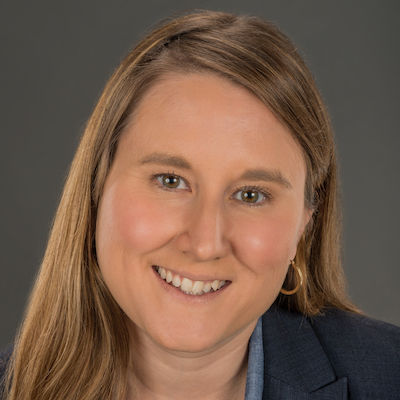
Jennifer Coogan

A.J. Bauer
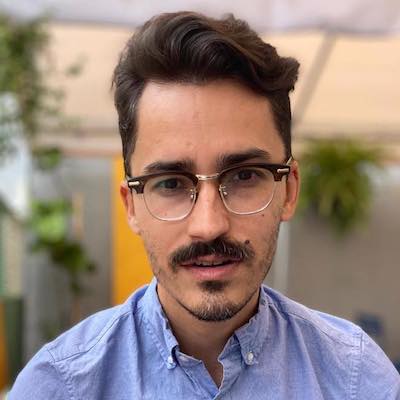
Anika Anand

Joe Amditis

Matthew Pressman

Larry Ryckman

Robert Hernandez

Julia Munslow

Meena Thiruvengadam
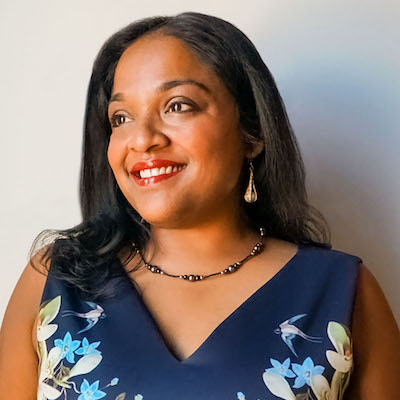
Chicas Poderosas

Jim Friedlich

Michael W. Wagner

Christoph Mergerson
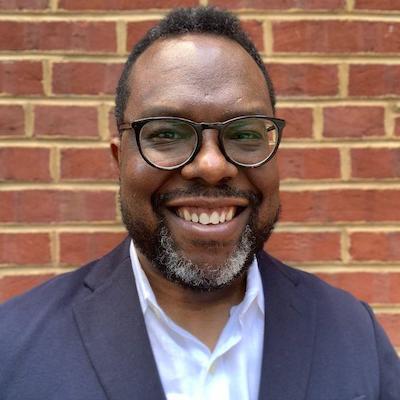
Mary Walter-Brown

Doris Truong

Kristen Jeffers
Parker Molloy

Gabe Schneider
Juleyka Lantigua

AX Mina

Joshua P. Darr

Melody Kramer

Cherian George
Rasmus Kleis Nielsen

S. Mitra Kalita

Tom Trewinnard

Millie Tran

Nik Usher

Sam Guzik

Tony Baranowski
Mandy Jenkins

Mike Rispoli
Kathleen Searles Rebekah Trumble

Megan McCarthy

Sarah Stonbely

Anthony Nadler

Matt DeRienzo

Tamar Charney

Gonzalo del Peon
Natalia Viana
Izabella Kaminska
Alice Antheaume
Wilson Liévano
Catalina Albeanu

Rachel Glickhouse

Matt Karolian
Francesco Zaffarano
Kerri Hoffman
Andrew Freedman

Simon Allison

Jody Brannon

Joy Mayer

Zizi Papacharissi
Moreno Cruz Osório

Mario García
Jessica Clark

Raney Aronson-Rath
Jesenia De Moya Correa
David Cohn

Don Day

Joni Deutsch
Jonas Kaiser

David Skok
Eric Nuzum

Chase Davis

Paul Cheung

Kristen Muller
Whitney Phillips

Brian Moritz

John Davidow

Simon Galperin

Daniel Eilemberg
Candace Amos
Kendra Pierre-Louis

Cristina Tardáguila
Shannon McGregor Carolyn Schmitt

Stephen Fowler

Shalabh Upadhyay
Jennifer Brandel

Errin Haines

Joanne McNeil

Julia Angwin

Burt Herman
Victor Pickard

Stefanie Murray

Jesse Holcomb
Ariel Zirulnick
Amara Aguilar

James Salanga

James Green

Ståle Grut
Christina Shih

Cindy Royal

Anita Varma