
Podcasting goes local
I’m fortunate to have a front row seat to the remarkable daily work of public media organizations across the country. Hundreds of stations are making important daily choices, across programming, content, and format. Such strategic choices can be consequential and, if made carefully, help to shape how audiences experience their communities and the world.
If you’re steeped in the media industry, you might absorb headlines about the decline of print newspapers. But there are also signs of bright spots. According to a recent study from Gallup and the Knight Foundation, trust in local news remains high compared to other news types, and public radio and local radio is a top source of where audiences turn. Notably, public media is local, yet serves the whole country in communities of all sizes. In “Funding Democracy: Public Media and Democratic Health in 33 Countries”, Victor Pickard and Timothy Neff note that “public media has myriad social benefits, including more diverse news coverage, increased public knowledge about politics and public affairs, and lower levels of extremist views.” They go on to say that “countries with independent and well-funded public broadcasting systems also consistently have stronger democracies.”
Across media, we’re also seeing digital startups evaluating and tackling the needs of communities. In some communities, an active “vacuum” strategy is underway — finding ways to fill a gap once held by local papers. In others, there are public-private partnerships emerging. While vehicles of information are evolving, organizations of all stripes can choose to explore audio — podcasting — as a medium. (Many public radio stations themselves have branched out into podcasting, and have done so successfully.) In 2023, organizations that do will benefit. Podcasting will grow as an essential source of news, storytelling, and opportunity within local communities.
There are several examples to draw from our experience at PRX to underscore podcasting’s value: a research and community-building project we undertook highlighted its empowering aspects. We manage in-person community spaces in Boston and in San Francisco — Podcast Garages — where people who call each area home can meet their peers, pursue learning opportunities, network, and record. Our training team works with journalists and storytellers across both digital and print to help build sustainable podcasts informed by defined points of view. We’re lucky to distribute podcasts from many talented producers across different engaging content areas. A lesson we’ve learned again and again: podcasts open up opportunities to connect with engaged listeners around shared interests, culture, storytelling, and language, and a rich opportunity to deliver stories, news, and information.
Audio consumption is on the rise. While radio stations are distinct in their hard infrastructure, podcasting opens up opportunities for organizations to think beyond those limitations. In the year ahead, those who choose to explore podcasting will further empower their audiences and themselves.
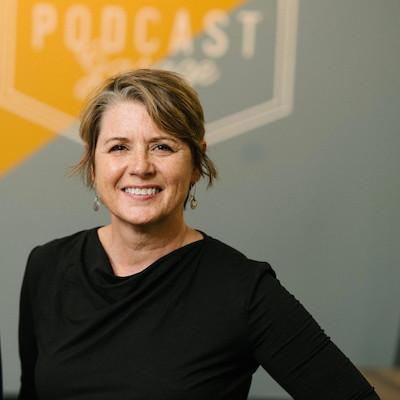
Kerri Hoffman is the CEO of PRX.
I’m fortunate to have a front row seat to the remarkable daily work of public media organizations across the country. Hundreds of stations are making important daily choices, across programming, content, and format. Such strategic choices can be consequential and, if made carefully, help to shape how audiences experience their communities and the world.
If you’re steeped in the media industry, you might absorb headlines about the decline of print newspapers. But there are also signs of bright spots. According to a recent study from Gallup and the Knight Foundation, trust in local news remains high compared to other news types, and public radio and local radio is a top source of where audiences turn. Notably, public media is local, yet serves the whole country in communities of all sizes. In “Funding Democracy: Public Media and Democratic Health in 33 Countries”, Victor Pickard and Timothy Neff note that “public media has myriad social benefits, including more diverse news coverage, increased public knowledge about politics and public affairs, and lower levels of extremist views.” They go on to say that “countries with independent and well-funded public broadcasting systems also consistently have stronger democracies.”
Across media, we’re also seeing digital startups evaluating and tackling the needs of communities. In some communities, an active “vacuum” strategy is underway — finding ways to fill a gap once held by local papers. In others, there are public-private partnerships emerging. While vehicles of information are evolving, organizations of all stripes can choose to explore audio — podcasting — as a medium. (Many public radio stations themselves have branched out into podcasting, and have done so successfully.) In 2023, organizations that do will benefit. Podcasting will grow as an essential source of news, storytelling, and opportunity within local communities.
There are several examples to draw from our experience at PRX to underscore podcasting’s value: a research and community-building project we undertook highlighted its empowering aspects. We manage in-person community spaces in Boston and in San Francisco — Podcast Garages — where people who call each area home can meet their peers, pursue learning opportunities, network, and record. Our training team works with journalists and storytellers across both digital and print to help build sustainable podcasts informed by defined points of view. We’re lucky to distribute podcasts from many talented producers across different engaging content areas. A lesson we’ve learned again and again: podcasts open up opportunities to connect with engaged listeners around shared interests, culture, storytelling, and language, and a rich opportunity to deliver stories, news, and information.
Audio consumption is on the rise. While radio stations are distinct in their hard infrastructure, podcasting opens up opportunities for organizations to think beyond those limitations. In the year ahead, those who choose to explore podcasting will further empower their audiences and themselves.
Kerri Hoffman is the CEO of PRX.
Nicholas Jackson There will be launches — and we’ll keep doing the work
Richard Tofel The press might get better at vetting presidential candidates
James Salanga Journalists work from a place of harm reduction
Eric Thurm Journalists think of themselves as workers
Jennifer Brandel AI couldn’t care less. Journalists will care more.
Dana Lacey Tech will screw publishers over
Ben Werdmuller The internet is up for grabs again
David Skok Renewed interest in human-powered reporting
Johannes Klingebiel The innovation team, R.I.P.
Hillary Frey Death to the labor-intensive memo for prospective hires
Jenna Weiss-Berman The economic downturn benefits the podcasting industry. (No, really!)
Molly de Aguiar and Mandy Van Deven Narrative change trend brings new money to journalism
Cory Bergman The AI content flood
Alex Sujong Laughlin Credit where it’s due
Elizabeth Bramson-Boudreau More of the same
Masuma Ahuja Journalism starts working for and with its communities
Priyanjana Bengani Partisan local news networks will collaborate
Kavya Sukumar Belling the cat: The rise of independent fact-checking at scale
Snigdha Sur Newsrooms get nimble in a recession
Kathy Lu We need emotionally agile newsroom leaders
Michael W. Wagner The backlash against pro-democracy reporting is coming
Tre'vell Anderson Continued culpability in anti-trans campaigns
Francesco Zaffarano There is no end of “social media”
Wilson Liévano Diaspora journalism takes the next step
Mauricio Cabrera It’s no longer about audiences, it’s about communities
Sarah Marshall A web channel strategy won’t be enough
Ryan Nave Citizen journalism, but make it equitable
Mar Cabra The inevitable mental health revolution
Andrew Losowsky Journalism realizes the replacement for Twitter is not a new Twitter
John Davidow A year of intergenerational learning
Felicitas Carrique and Becca Aaronson News product goes from trend to standard
Rodney Gibbs Recalibrating how we work apart
Emma Carew Grovum The year to resist forgetting about diversity
Joni Deutsch Podcast collaboration — not competition — breeds excellence
A.J. Bauer Covering the right wrong
Alexandra Svokos Working harder to reach audiences where they are
Emily Nonko Incarcerated reporters get more bylines
Joe Amditis AI throws a lifeline to local publishers
Nicholas Diakopoulos Journalists productively harness generative AI tools
Danielle K. Brown and Kathleen Searles DEI efforts must consider mental health and online abuse
Sam Guzik AI will start fact-checking. We may not like the results.
Surya Mattu Data journalists learn from photojournalists
Paul Cheung More news organizations will realize they are in the business of impact, not eyeballs
Moreno Cruz Osório Brazilian journalism turns wounds into action
Simon Galperin Philanthropy stops investing in corporate media
Jennifer Choi and Jonathan Jackson Funders finally bet on next-generation news entrepreneurs
Anna Nirmala News organizations get new structures
Matt Rasnic More newsroom workers turn to organized labor
Gordon Crovitz The year advertisers stop funding misinformation
Mario García More newsrooms go mobile-first
Larry Ryckman We’ll work together with our competitors
Brian Stelter Finding new ways to reach news avoiders
Ryan Gantz “I’m sorry, but I’m a large language model”
Gabe Schneider Well-funded journalism leaders stop making disparate pay
Sarah Alvarez Dream bigger or lose out
Delano Massey The industry shakes its imposter syndrome
Kirstin McCudden We’ll codify protection of journalism and newsgathering
Elite Truong In platform collapse, an opportunity for community
Amethyst J. Davis The slight of the great contraction
Sumi Aggarwal Smart newsrooms will prioritize board development
Cari Nazeer and Emily Goligoski News organizations step up their support for caregivers
Eric Nuzum A focus on people instead of power
Sue Cross Thinking and acting collectively to save the news
Josh Schwartz The AI spammers are coming
Daniel Trielli Trust in news will continue to fall. Just look at Brazil.
Don Day The news about the news is bad. I’m optimistic.
Bill Adair The year of the fact-check (no, really!)
Peter Sterne AI enters the newsroom
Laxmi Parthasarathy Unlocking the silent demand for international journalism
Valérie Bélair-Gagnon Well-being will become a core tenet of journalism
Leezel Tanglao Community partnerships drive better reporting
Burt Herman The year AI truly arrives — and with it the reckoning
Christina Shih Shared values move from nice-to-haves to essentials
Alexandra Borchardt The year of the climate journalism strategy
Raney Aronson-Rath Journalists will band together to fight intimidation
Andrew Donohue We’ll find out whether journalism can, indeed, save democracy
Eric Holthaus As social media fragments, marginalized voices gain more power
Tamar Charney Flux is the new stability
Stefanie Murray The year U.S. media stops screwing around and becomes pro-democracy
Julia Angwin Democracies will get serious about saving journalism
Nicholas Thompson The year AI actually changes the media business
Brian Moritz Rebuilding the news bundle
Jaden Amos TikTok personality journalists continue to rise
Barbara Raab More journalism funders will take more risks
Doris Truong Workers demand to be paid what the job is worth
Jarrad Henderson Video editing will help people understand the media they consume
Tim Carmody Newsletter writers need a new ethics
Amy Schmitz Weiss Journalism education faces a crossroads
Gina Chua The traditional story structure gets deconstructed
Jesse Holcomb Buffeted, whipped, bullied, pulled
Anita Varma Journalism prioritizes the basic need for survival
Christoph Mergerson The rot at the core of the news business
Cindy Royal Yes, journalists should learn to code, but…
J. Siguru Wahutu American journalism reckons with its colonialist tendencies
Cassandra Etienne Local news fellowships will help fight newsroom inequities
Jessica Maddox Journalists keep getting manipulated by internet culture
Walter Frick Journalists wake up to the power of prediction markets
Mael Vallejo More threats to press freedom across the Americas
Julia Beizer News fatigue shows us a clear path forward
Laura E. Davis The year we embrace the robots — and ourselves
Sarabeth Berman Nonprofit local news shows that it can scale
Pia Frey Publishers start polling their users at scale
Anika Anand Independent news businesses lead the way on healthy work cultures
David Cohn AI made this prediction
Martina Efeyini Talk to Gen Z. They’re the experts of Gen Z.
Kerri Hoffman Podcasting goes local
S. Mitra Kalita “Everything sucks. Good luck to you.”
Alex Perry New paths to transparency without Twitter
AX Mina Journalism in a time of permacrisis
Taylor Lorenz The “creator economy” will be astroturfed
Sarah Stonbely Growth in public funding for news and information at the state and local levels
Joshua P. Darr Local to live, wire to wither
Dannagal G. Young Stop rewarding elite performances of identity threat
Anthony Nadler Confronting media gerrymandering
Ariel Zirulnick Journalism doubles down on user needs
Kaitlin C. Miller Harassment in journalism won’t get better, but we’ll talk about it more openly
Jacob L. Nelson Despite it all, people will still want to be journalists
Mariana Moura Santos A woman who speaks is a woman who changes the world
Rachel Glickhouse Humanizing newsrooms will be a badge of honor
Janet Haven ChatGPT and the future of trust
Megan Lucero and Shirish Kulkarni The future of journalism is not you
Basile Simon Towards supporting criminal accountability
Lisa Heyamoto The independent news industry gets a roadmap to sustainability
Ryan Kellett Airline-like loyalty programs try to tie down news readers
Karina Montoya More reporters on the antitrust beat
Jim VandeHei There is no “peak newsletter”
Parker Molloy We’ll reach new heights of moral panic
Bill Grueskin Local news will come to rely on AI
Jessica Clark Open discourse retrenches
Eric Ulken Generative AI brings wrongness at scale
Kaitlyn Wells We’ll prioritize media literacy for children
Ståle Grut Your newsroom experiences a Midjourney-gate, too
Shanté Cosme The answer to “quiet quitting” is radical empathy
Esther Kezia Thorpe Subscription pressures force product innovation
Peter Bale Rising costs force more digital innovation
Khushbu Shah Global reporting will suffer
Errin Haines Journalists on the campaign trail mend trust with the public
Michael Schudson Journalism gets more and more difficult
Jakob Moll Journalism startups will think beyond English
Upasna Gautam Technology that performs at the speed of news
Juleyka Lantigua Newsrooms recognize women of color as the canaries in the coal mine
Jonas Kaiser Rejecting the “free speech” frame
Nik Usher This is the year of the RSS reader. (Really!)
Dominic-Madori Davis Everyone finally realizes the need for diverse voices in tech reporting
Alan Henry A reckoning with why trust in news is so low
Victor Pickard The year journalism and capitalism finally divorce
Sam Gregory Synthetic media forces us to understand how media gets made
Joanne McNeil Facebook and the media kiss and make up
Zizi Papacharissi Platforms are over
Mary Walter-Brown and Tristan Loper Mission-driven metrics become our North Star
Sue Schardt Toward a new poetics of journalism
Jody Brannon We’ll embrace policy remedies
Ayala Panievsky It’s time for PR for journalism
Al Lucca Digital news design gets interesting again
Sue Robinson Engagement journalism will have to confront a tougher reality
Susan Chira Equipping local journalism
Jim Friedlich Local journalism steps up to the challenge of civic coverage


